Another rare bird from our recent South Island trip, Dianne and I found a pair of Black Stilt feeding in a small lake near Lake McGregor and Lake Tekapo. This is near the natural breeding grounds for Black Stilt, of which there are about 100 pairs.
New Zealand and World Wide
Category: Uncategorized
Another rare bird from our recent South Island trip, Dianne and I found a pair of Black Stilt feeding in a small lake near Lake McGregor and Lake Tekapo. This is near the natural breeding grounds for Black Stilt, of which there are about 100 pairs.

Dianne and I had a holiday in Queenstown, so we took the opportunity to look for Rock Wren at the well known Homer Tunnel site. On the Te Anau side of the tunnel there is a small carpark on the right hand side, and currently there seem to be two pairs of Rock Wren in the area. We had good views of one pair for a few minutes, before they headed off into the rocks. Both birds were banded, and it was good to see DoC traps in the area for predators. Rock Wren are uncommon, and only found in the South Island alpine areas, much of which is quite hard to access.

The introduction of Rifleman into Zealandia was curtailed because the numbers of birds in the Eastbourne area are down. So it is good to see that there are some birds breeding. I watched a pair of birds taking grubs to their nest in a dead tree above Days Bays. It is always hard to get a good photo of these little birds as they flit around in the canopy.

On Saturday we had a lovely day on Kapiti Island. The beach area has Bellbirds, Red-crowned Parakeets and NZ Pigeons feeding in the sun on the low bushes. We followed the Wilkinson track up to the trig (about a 2 hour walk) with plenty of Kaka, Robin, Saddleback, Stitchbird, Whitehead and Tui on the way up. There are Weka (Western, not the NI subspecies) in the bush and a good view from the top. We didn’t see or hear any Kokako, which are more likely to be seen on the Trig track which we were discouraged from going up. The day spoilt only by the efforts of Kapiti Island Nature Tours, the ferry operator. One of the reasons I haven’t been for a few years has been the escalating costs of the visit, and the fact they really want you to do a half day tour or stay overnight at the top end (which is REALLY expensive). On arrival at the island you are subjected to a compulsory 30+ minutes history talk about the island – it is very interesting to hear about the whalers once or twice, but I’ve heard the story so many times I don’t need to hear it again. Why can’t they deliver a safety briefing on the ferry ride across and then let you go see the birds when you arrive? I’ve decided that I prefer Tiritiri Matangi.
About 20 Fernbirds have recently been released at Pauatahanui wetlands near Porirua. We found two pairs today. They are quiet birds that spend most of their time well hidden in the reeds, but they aren’t really shy of humans and with patience you can see them flit between bushes. These birds are banded and are being monitored closely.


We have just had a few days in Noumea (New Caledonia). Birding was not the main purpose of the trip, but we hoped to see some birds whilst we were here. In the central township there isn’t much – Common Myna, Red-vented Bulbul, House Sparrow, Common Waxbill, Silvereye, Grey Fantail, Spotted Dove, Feral Pigeon, Silver Gull on the shore, and one or two Sacred Kingfisher. We did see some Ruddy Turnstone on the shoreline and Wandering Tattler, quite a large number of Wedge-tailed Shearwater going anti-clockwise around the coastline, and at the nearby Hippodrome with a lake there were some Pacific Golden Plover and a lone Nankeen Night Heron. The most interesting birds are at Parc Provincial de la Riviere Bleue. We had a trip arranged with a guide, but unfortunately it doesn’t take much wind or rain in New Caledonia for these trips to be cancelled. Our backup plan was a trip to the zoo (Parc Zoologique et Forestier Michel-Corbasson) – we did manage to get in for 30 minutes and got a quick view of a Kagu (Cagou) before that closed as well. I wasn’t very happy. Noumea is an expensive place to get to; the eating and accommodation are expensive, so it would have been nice to see some birds whilst we were here.

An unusual visitor for the Manawatu Estuary, the Terek Sandpiper was present with a Turnstone, a Wrybill, three Sharp-tailed Sandpipers and the usual Bar-tailed Godwits and Lesser Knots.
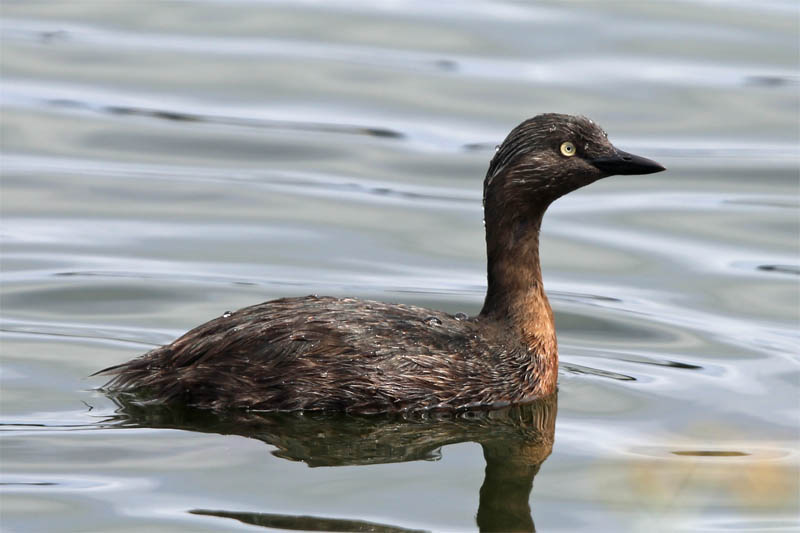
There is a good population of NZ Dabchick near Wellington, at Pharazyn Reserve in Waikanae and the Otaki Oxidation ponds. This bird was seen from the hide at Pharazyn Reserve.
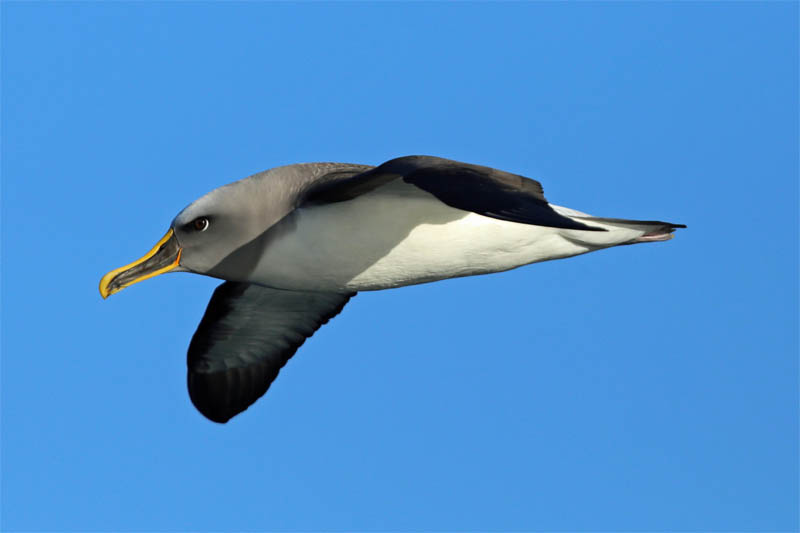
We did a pelagic out into Cook Strait with a local fishing charter, and you don’t need to go very far before the Albatrosses turn up. We also had White-capped, Salvin’s, Royals and Black-browed. This is a Northern Buller Mollymawk. The bill is strikingly colourful.
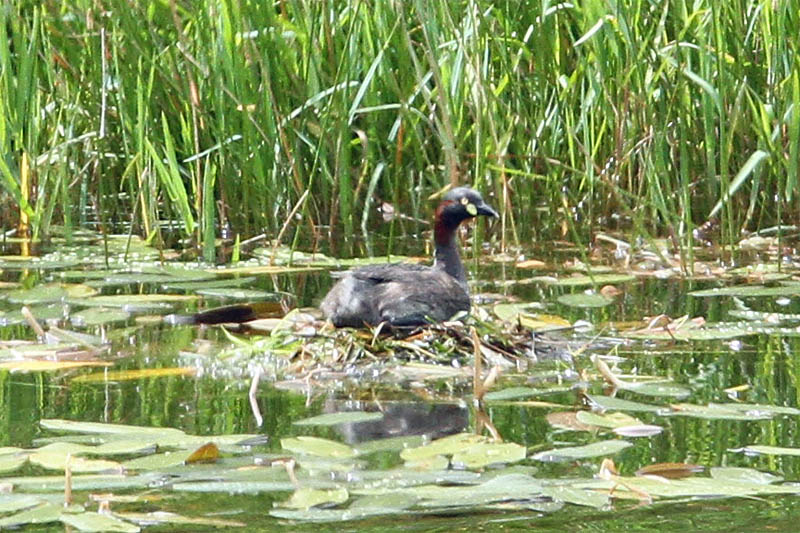
These birds are reasonably common on lakes and ponds in the far north. A pair had a nest on a small pond on a private property on Ormiston Road near Ruakaka. They are a bit shy, diving if you get too close and swimming off.