Birding Costa Rica

We had 3 weeks birding in Costa Rica in March, where I got my 2000th lifer – a Resplendent Quetzal as shown above. We had a guide from Tropical Feathers with us for the entire trip, and he was extremely good at finding birds for us. We found it a bit hot in the lowlands, but pleasant in the mountains. Plenty of hummingbirds, and good boat trips. Highly recommended place for keen birders to visit.

Turnstone, Foxton Beach

Spring brings the arctic migrants back to NZ, and we found a single Turnstone at Foxton Beach on Saturday 30th September. We also spotted a Hudsonian Godwit in the flock of about 120 Bar-tailed Godwits, which is more unusual. The Turnstone was hanging out with the Godwits, and with 6 Banded Dotterel on the sand near the parade.

Android smartphone app

I have finished work on my new WorldBirds Android Smartphone application, which is freely available for download from https://nzbirding.com/worldbirds/ (this page has the link to the files to download from the Google Drive source site). It is a list of all birds in the world, aligned to the latest IOC list (currently v13.2, with 11, 161 species) with checklists for 278 countries/regions/territories. There are thumbnail pictures for almost all the species, with links to birding sites with detailed information on each species. You can log bird sightings with the GPS co-ordinates, supported by Google Maps, and keep track of all your sightings. I have back-loaded by sightings from my earlier birding checklist applications, and I have over 10,000 sightings for the 1600+ species I have seen in 18 countries around the world. We will be using the checklist as we continue to visit countries and bird around the world.

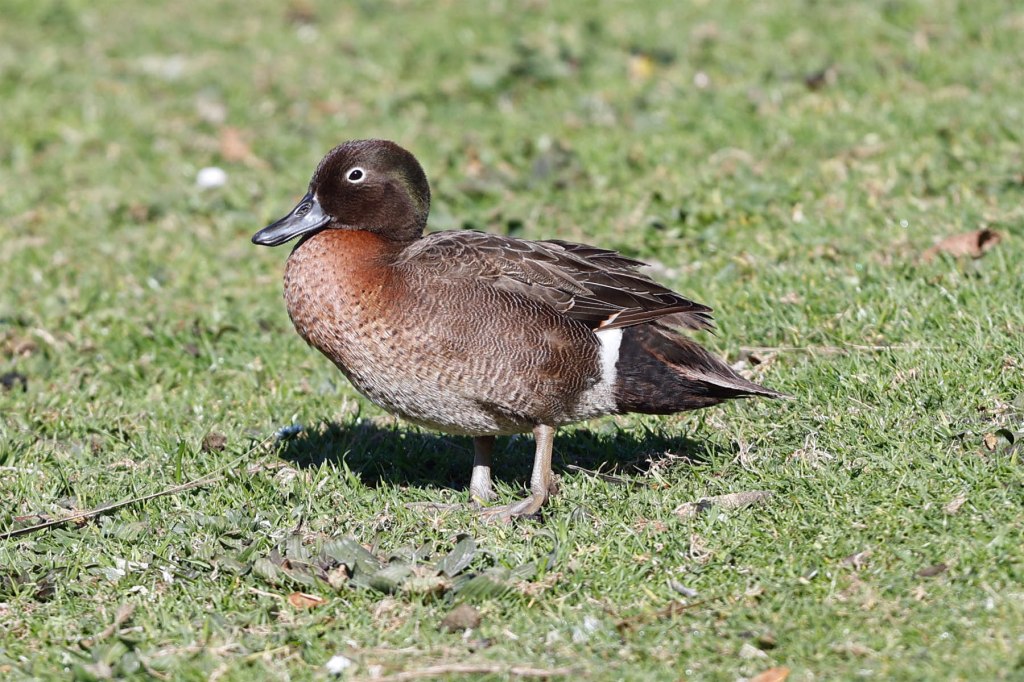
Brown Teal, Waikanae

It has been a while since I have posted, Covid having a lot to do with remaining at home and not getting out birding. We did visit Waimanu Lagoons in Waikanae where we found 3 Brown Teal (a pair and a single male). I understand there could be a few more around. They used to be commonly found at the lagoons but I haven’t seen them there for a few years.

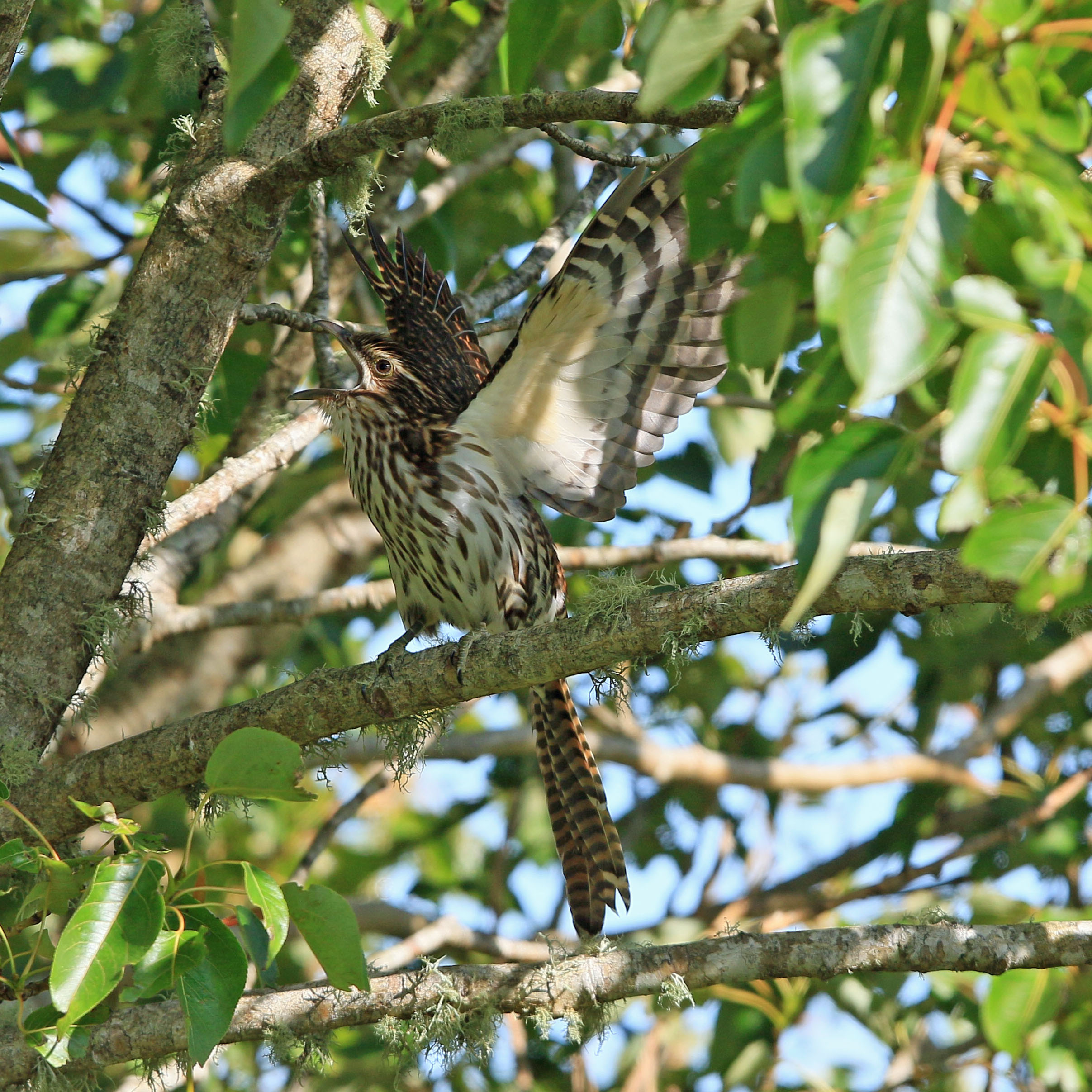
Long-tailed Cuckoo, Waitahinga trails

LTC3

Long-tailed Cuckoos have a status of “locally common”.  They are around in bush where Whiteheads are found, but can be really hard to see.  With some help from Whanganui local Paul Gibson we visited a good spot (Waitahinga trails, about 12 km north of Bushy Park) where we heard and saw several birds.  More often seen flying overhead – once they land in a tree they can be really hard to spot.  They sit quite still on a branch when they call.

NZ Dotterel

NZ Dotterel Waikanae Beach 21 Sep 2019 1st.jpg

It is unusual to see the endemic New Zealand Dotterel breeding so far south in the North Island.  There is a pair attempting to breed on Waikanae Beach again this year.  A very popular spot for whitebaiting, dog walkers and general family fun, so it is quite a challenge for these birds.  There are signs and a simple fence to try and keep people out, but we’ll see how it goes again this year.

Madagascar birding

Birds 39 Schleger's Asity

Dianne and I are back from 3 weeks birding in Madagascar, a tour arranged by Detlef and Carol of Birder’s Rest (they do Peru, Indonesia and NZ birding tours).  The bird above is a male Schlegel’s Asity, one of the highlights of the trip.  Much of the Madagascar rainforest has been lost to mankind, but there are still tracts where the Lemur’s and other native wildlife remain.  We found Andasibe-Mantadia national park particularly good, as were Berenty and Ankarafantsika.  Travel is not that easy as the roads are often pot-holed, but once at the destination the birding is good.  Madagascar has a number of unique bird families, including Vanga’s, Asity’s and Mesites.

Hoary-headed Grebe

HH Grebe

These birds are named because of the streaky feathers across their face.  On my recent trip to Nelson I drove down the road towards Kaikoura to Lake Elterwater, which is a nice wildlife refuge and full of water at this time of year.  On a previous visit I had found the lake pretty dry, but currently water is quite high around the viewing platform and a pair of Hoary-headed Grebe were floating past.  Up until recently these birds have been Australian vagrants, but a couple of birds have bred at Lake Elterwater in the last couple of years.  There may be 4 or 5 birds with the new status of rare native.  They are similar in size to the New Zealand Dabchick and Australian Little Grebe, but easily distinguished in breeding plumage.

Australian Wood Duck

Wood Duck

A short trip to the top of the South Island in September to see a couple of rare native birds in the region.  Australian Wood Duck or Maned Duck used to be Australian vagrants.  They are quite common in Australia, and a couple have been nesting in the Mapua region near Nelson since 2015.  I understand there are now about 12 birds.  On my second visit to the Playhouse cafe pond I found three birds (two females and a male) on the grass beside the pond.  Hoping they breed again this year.

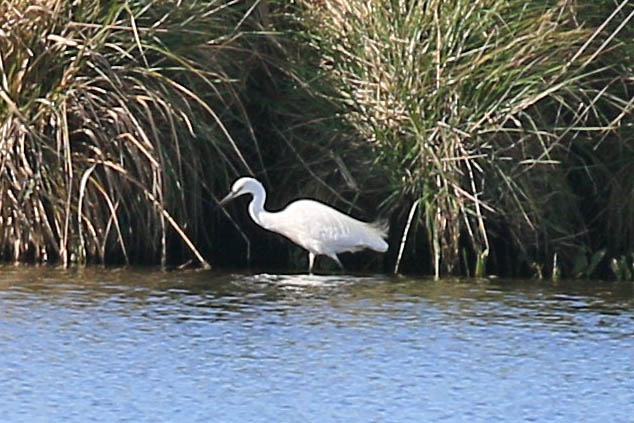
Little Egret, Lake Omanu

Little Egret, Lake Omanu, 11 Aug 2018

Not a great photo, but enough to show the Little Egret back at Lake Omanu near Foxton Beach.  There were also two White Heron (Great Egret) – one at Lake Omanu and one at Foxton Estuary itself.  We’ve seen Little Egret in almost every country we have visited, and there seems to be always a few that winter over in New Zealand each year.